
Managing technology assets is an important part of maintaining organised and efficient business operations. Computers, laptops, servers, networking devices and storage equipment support everyday activities across different departments. As technology changes and equipment reaches the end of its useful life, businesses need structured processes to manage these resources. IT asset disposal services play an important role in this process by helping organisations handle outdated, unused or retired technology equipment through appropriate collection, data handling, refurbishment, recycling and disposal procedures.
Understanding how IT asset disposal fits into business technology management helps organisations maintain better equipment records, protect information, manage electronic waste and support responsible resource utilisation. These services also connect technology lifecycle planning with broader operational and environmental objectives.
1. Understanding IT Asset Disposal in Business Operations
IT asset disposal refers to the organised management of technology equipment that is no longer required for its original business purpose. It involves several activities designed to manage equipment appropriately after its operational use.
Common Types of IT Assets
Businesses use different types of technology equipment, and each category may require a specific handling process.
Common examples include:
- Desktop computers and laptops
- Servers and data centre equipment
- Printers, scanners and photocopiers
- Networking devices and routers
- External hard drives and storage systems
- Monitors and display equipment
- Keyboards, accessories and other peripherals
Maintaining an organised disposal process helps businesses understand which assets are being retired and how each category should be managed.
See also: Swimming Bags: What to Look for in a Practical and Durable Design
Why Asset Disposal Is Part of Technology Management
Technology management does not end when equipment is purchased or installed. Organisations must also consider maintenance, upgrades, replacement schedules and retirement procedures.
A structured disposal process creates continuity throughout the technology lifecycle. It helps businesses maintain accurate asset information while ensuring that retired equipment is directed towards suitable reuse, recovery or recycling channels.
2. Protecting Business Information During Equipment Disposal
Data security is one of the most important considerations when retiring technology equipment. Computers, servers and storage devices may contain confidential business documents, employee information, customer records and operational data.
Removing equipment from regular use does not automatically remove the information stored on it.
Understanding Data Sanitisation
Data sanitisation involves applying appropriate methods to make stored information inaccessible and prevent its recovery.
Depending on the equipment and storage technology, methods may include:
- Secure data erasure: Specialised software is used to overwrite stored information according to an appropriate sanitisation standard.
- Cryptographic erasure: Encryption keys are securely removed where supported, making encrypted information inaccessible.
- Physical destruction: Storage media may be physically destroyed when reuse is unsuitable or secure erasure cannot be verified.
Maintaining Data Disposal Records
Documentation provides visibility into how storage devices and information-bearing equipment have been processed.
Useful records may include asset identification numbers, equipment descriptions, sanitisation methods, processing dates and certificates of destruction where applicable.
These records help organisations maintain accountability and support internal information security procedures.
3. Supporting Better IT Asset Lifecycle Management
IT asset lifecycle management involves monitoring technology equipment from acquisition through installation, operation, maintenance and eventual retirement.
Disposal planning is an essential part of this lifecycle because it helps organisations understand when equipment should be replaced and how retired assets should be handled.
Improving Asset Visibility
Businesses often operate multiple devices across departments, offices and operational locations. Without accurate records, identifying equipment that is no longer required can become difficult.
A structured disposal process supports better asset visibility through:
- Equipment identification and classification
- Recording asset condition and specifications
- Tracking equipment retirement dates
- Maintaining disposal and transfer records
- Updating internal asset management systems
These activities help organisations maintain reliable information about their technology resources.
Connecting Disposal With Replacement Planning
Equipment replacement can be planned more effectively when businesses understand the condition and performance of existing assets.
For example, an organisation upgrading its computer systems may identify which devices are suitable for refurbishment, which can be redeployed internally and which require recycling.
This approach connects disposal activities with future technology requirements.
4. Encouraging Responsible Electronic Waste Management
Electronic equipment contains different materials, including metals, plastics, glass and electronic components. When devices reach the end of their useful life, their materials need to be managed through appropriate recovery and recycling processes.
Responsible electronic waste management helps reduce the amount of discarded technology sent to general waste streams.
Understanding Electronic Waste Categories
Different technology products contain different components and materials.
For instance:
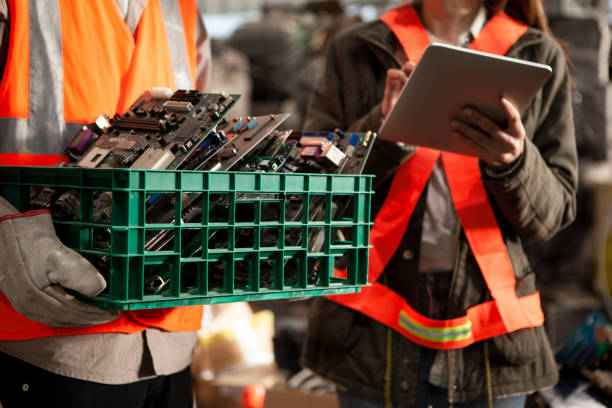
- Computers contain circuit boards, metal components and plastic casings.
- Batteries contain materials that require specialised handling.
- Monitors may contain glass, electronic components and other materials.
- Networking equipment includes circuit boards, wiring and metal parts.
Identifying these categories helps determine suitable processing and recycling methods.
Material Recovery and Recycling
Electronic waste recycling involves separating equipment into different material categories and recovering resources where technically and economically suitable.
Recovered materials may include aluminium, copper, steel, plastics and selected electronic components.
Proper sorting and processing support resource recovery while reducing the demand for certain newly extracted raw materials.
5. Extending Equipment Value Through Reuse and Refurbishment
Not every retired IT asset is completely unusable. Some devices may still have sufficient functionality for refurbishment, resale, donation or internal redeployment.
IT asset disposal services can include equipment assessment to determine whether individual devices are suitable for further use.
Evaluating Equipment Condition
Before deciding how equipment should be processed, its physical and functional condition can be assessed.
Important evaluation factors include:
- Overall physical condition
- Hardware functionality
- Processing capacity
- Storage condition
- Compatibility with current technology requirements
- Availability of replacement components
This assessment helps determine the most appropriate next step for each asset.
Understanding Refurbishment
Refurbishment involves inspecting, cleaning, repairing and testing equipment to prepare it for another period of use.
Depending on its condition, a device may require component replacement, software reinstallation or hardware upgrades.
Equipment that meets appropriate quality and security requirements may be suitable for reuse in another operational environment.
6. Improving Operational Organisation Through Structured Disposal
A well-organised disposal process supports smoother business operations by establishing clear responsibilities and procedures for retiring technology equipment.
Without defined processes, organisations may find it difficult to track retired devices, manage storage areas or maintain consistent documentation.
Creating a Standard Disposal Workflow
A standard workflow provides a consistent approach to managing equipment throughout the disposal process.
A typical process includes:
- Asset identification: Identify equipment that is outdated, unused or scheduled for replacement.
- Inventory verification: Confirm asset details, ownership and recorded specifications.
- Data security assessment: Determine the appropriate data sanitisation requirements.
- Equipment evaluation: Assess whether devices are suitable for reuse, refurbishment or recycling.
- Processing and recovery: Direct equipment towards the appropriate handling channel.
- Record maintenance: Update asset registers and retain relevant processing documentation.
Supporting Departmental Coordination
IT departments, procurement teams, finance professionals and information security personnel may all contribute to asset retirement activities.
Clear communication between these departments helps ensure that equipment is properly identified, approved for retirement and removed from operational records.
7. Considering Compliance and Documentation Requirements
Technology disposal involves several considerations relating to information security, environmental management and organisational responsibilities.
Businesses should understand the requirements applicable to their industry, location and equipment categories.
Maintaining Appropriate Documentation
Documentation helps demonstrate how retired assets were managed.
Depending on the process, records may include:
- Asset inventory reports
- Equipment collection records
- Data sanitisation certificates
- Destruction certificates
- Recycling and material recovery documentation
- Equipment transfer records
Maintaining these documents supports internal reviews and provides a reference for future asset management decisions.
Understanding Environmental Responsibilities
Electronic waste management requirements can vary according to local legislation and regulatory frameworks.
Organisations should understand applicable requirements for electronic waste collection, transportation, processing and recycling. Selecting suitable processing methods helps align disposal activities with environmental responsibilities.
8. The Role of IT Asset Disposal in Future Technology Planning
Business technology requirements continue to evolve as organisations introduce new systems, improve infrastructure and adopt updated digital tools.
As a result, asset disposal is becoming increasingly connected to long-term technology planning.
Supporting Technology Upgrades
When organisations upgrade computers, servers or networking infrastructure, they generate equipment that needs an appropriate retirement strategy.
Planning disposal alongside upgrades helps coordinate equipment removal, data security procedures and asset record updates.
Encouraging a Circular Technology Approach
A circular approach to technology management focuses on keeping products and materials in use for as long as practical.
This may involve repairing equipment, refurbishing functional devices, recovering reusable components and recycling materials that cannot be used again in their original form.
Such practices help organisations make more informed decisions about technology resources throughout their lifecycle.
Conclusion
IT asset disposal is an important component of effective business technology management. It connects equipment retirement with data security, inventory management, electronic waste processing, refurbishment and responsible resource recovery. By establishing structured procedures, businesses can maintain better asset visibility, support information protection and manage technology equipment throughout its complete lifecycle.
A well-planned approach also helps organisations coordinate technology upgrades, maintain relevant documentation and incorporate responsible electronic waste management into their operational practices. As technology requirements continue to change, organised asset disposal will remain an important part of sustainable and efficient business technology management.