
Missing teeth can affect several aspects of everyday life, including eating, speaking and smiling confidently. Traditional tooth replacement procedures often involve multiple appointments and extended waiting periods, which may be inconvenient for people looking for a quicker solution. Advances in modern dentistry have introduced treatment approaches that can shorten the initial tooth replacement process while maintaining important standards of care.
One option is same day dental implants, a procedure that allows eligible patients to receive dental implants and temporary replacement teeth during a single treatment appointment. Although the process can provide immediate improvements in appearance and function, it is important to understand how it works, who may qualify and what happens during recovery.
What Are Same Day Dental Implants?
Same day dental implants are a tooth replacement approach in which an implant is placed into the jawbone and a temporary crown, bridge or other restoration may be attached on the same day.
In conventional implant treatment, patients may need to wait several months for the implant to integrate with the jawbone before receiving their final replacement teeth. With immediate loading techniques, a temporary restoration can sometimes be attached shortly after implant placement.
The main objective is to reduce the time spent without replacement teeth while allowing the implant to heal naturally.
However, receiving a temporary tooth on the day of surgery does not mean the implant has completely healed. The surrounding bone still needs time to bond with the implant through a process called osseointegration.
How Do Same Day Dental Implants Work?
The procedure involves carefully planning implant placement and ensuring that the implant achieves sufficient initial stability. This stability is important because the implant must withstand normal oral conditions while the surrounding bone heals.
The process generally involves several stages.
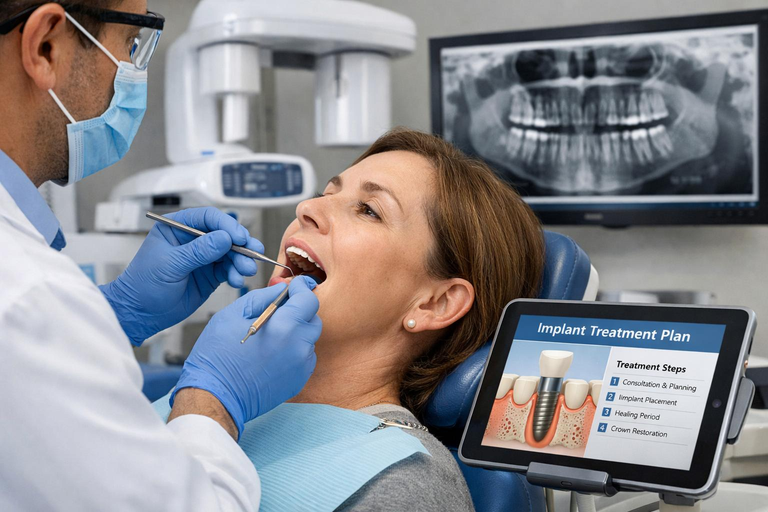
1. Initial Dental Consultation
The first step is a detailed dental examination. The dentist evaluates the patient’s oral health, missing teeth, gum condition and jawbone structure.
Medical history is also reviewed because certain health conditions and medications may influence surgical planning and recovery.
During this appointment, the dentist may use digital X-rays or three-dimensional scans to understand the position of nerves, sinuses and available bone.
2. Treatment Planning
After the examination, the dental professional develops an individual treatment plan.
This involves determining:
- The number of implants required.
- The appropriate implant positions.
- Whether bone grafting or other preparatory procedures are necessary.
- The type of temporary restoration.
- Whether immediate loading is appropriate.
Detailed planning helps reduce surgical complications and improves the chances of achieving a stable result.
3. Implant Placement
During surgery, the dentist or oral surgeon places a small titanium implant into the jawbone. The implant acts as an artificial tooth root and provides support for the replacement tooth.
The procedure is generally performed using local anaesthesia. Sedation may also be available depending on the patient’s needs and the complexity of the treatment.
Once the implant is positioned, its initial stability is assessed. If the conditions are suitable, the dentist may proceed with attaching a temporary restoration.
4. Attachment of Temporary Teeth
If the implant has sufficient initial stability and the patient’s clinical circumstances allow immediate loading, a temporary crown or bridge may be attached during the same appointment.
This can help restore the appearance of the smile and provide some chewing function.
However, patients are usually advised to avoid putting excessive pressure on the newly placed implant. Temporary restorations are designed to protect the healing implant while providing an improved appearance.
5. Final Restoration
After the healing period, the dentist checks whether the implant has successfully integrated with the jawbone.
Once sufficient healing has occurred, the temporary restoration can be replaced with a permanent crown, bridge or implant-supported denture.
The final restoration is designed to provide appropriate function, comfort and appearance.
Who Is a Suitable Candidate for Same Day Dental Implants?
Not everyone is suitable for immediate implant placement and loading. The treatment requires favourable oral health conditions and careful clinical assessment.
Patients who may be considered include those who:
- Have sufficient jawbone volume and density.
- Have healthy gums or successfully treated gum disease.
- Have good general health.
- Do not have uncontrolled medical conditions that may interfere with healing.
- Can follow post-operative instructions and maintain oral hygiene.
- Have sufficient initial implant stability after placement.
Patients with significant bone loss, active gum infections or certain uncontrolled medical conditions may require additional treatment before implant placement.
Smoking can also increase the risk of healing complications and implant failure. Patients should discuss their smoking habits with their dental professional before treatment.
What Are the Benefits of Same Day Dental Implants?
Immediate implant treatment can offer several advantages for appropriately selected patients.
Reduced Waiting Time
One of the main advantages is the possibility of receiving temporary replacement teeth during the same appointment as implant placement. This can reduce the period spent with visible gaps in the smile.
Improved Appearance
Missing teeth can affect facial appearance and confidence. Temporary implant-supported restorations may help patients regain a more complete smile while the implants heal.
Fewer Separate Treatment Stages
Depending on the individual treatment plan, combining implant placement with temporary restoration can reduce the number of separate appointments required.
Support for Oral Function
Temporary restorations can help restore certain speaking and chewing functions. However, patients may need to follow a modified diet until the implants have fully integrated.
Convenience
For suitable patients, completing the initial surgical and restoration stages in one appointment can make the treatment process more convenient.
What Are the Risks and Limitations?
Although immediate implant treatment can be beneficial, it is not suitable for every situation. The procedure also carries risks that patients should understand before making a decision.
Potential complications include:
- Implant failure due to inadequate bone integration.
- Infection around the surgical area.
- Swelling, bleeding or post-operative discomfort.
- Damage to nearby nerves or anatomical structures.
- Loosening or damage to temporary restorations.
- Delayed healing due to underlying health conditions.
One important consideration is the pressure placed on the implant during healing. Excessive chewing forces may interfere with osseointegration, particularly when the implant does not have sufficient initial stability.
For this reason, dentists carefully assess whether immediate loading is appropriate rather than recommending it for every patient.
What Is the Recovery Process Like?
Recovery varies depending on the number of implants placed, the patient’s general health and the complexity of the procedure.
Some swelling, tenderness and minor bleeding may occur during the first few days. These symptoms generally improve as healing progresses.
Dietary Recommendations
Patients are commonly advised to follow a soft-food diet during the early healing period.
Suitable food choices may include:
- Mashed potatoes and soft vegetables.
- Yoghurt and soft dairy products.
- Scrambled eggs.
- Well-cooked pasta.
- Soft fish and other easy-to-chew foods.
Hard, crunchy and sticky foods should be avoided when recommended by the dentist. Patients should also avoid chewing directly on the implant-supported temporary restoration.
Maintaining Oral Hygiene
Keeping the mouth clean is important for reducing the risk of infection and protecting the surrounding gum tissue.
Patients should follow their dentist’s cleaning instructions, use a soft-bristled toothbrush when appropriate and attend scheduled follow-up appointments.
Follow-Up Visits
Regular dental examinations allow the dentist to monitor healing, check implant stability and identify potential complications.
If persistent pain, unusual swelling, bleeding or implant movement occurs, patients should contact their dental professional promptly.
Same Day Dental Implants vs Traditional Dental Implants
The main difference between these approaches is the timing of the temporary restoration.
With traditional implant treatment, the implant is generally placed first and left to heal before the final replacement tooth is attached. This may involve a waiting period of several months.
With immediate loading, a temporary restoration may be attached on the day of implant placement when clinical conditions permit.
Both approaches rely on osseointegration for long-term implant stability. The most suitable method depends on bone quality, implant stability, oral health and individual treatment requirements.
Importantly, same-day treatment does not necessarily mean faster biological healing
.How Long Do Same Day Dental Implants Last?
The lifespan of dental implants depends on several factors, including implant stability, oral hygiene, bone health, lifestyle habits and regular professional maintenance.
Although the temporary restoration may be provided immediately, the implant itself needs time to integrate with the jawbone.
With appropriate placement and consistent care, dental implants can provide long-term tooth replacement. However, complications such as gum inflammation, infection and excessive biting forces can affect their longevity.
Regular dental check-ups and good oral hygiene are essential for maintaining the health of both the implant and surrounding tissues.
Conclusion
Same day dental implant treatment offers an approach that allows eligible patients to receive an implant and temporary replacement teeth during one appointment. It can reduce waiting time, improve the appearance of the smile and provide some immediate oral function.
However, successful treatment depends on sufficient bone support, good oral health and adequate initial implant stability. Patients should also understand that temporary teeth do not mean the healing process is complete.
A thorough dental examination is essential for determining whether immediate implant treatment is appropriate. By understanding the procedure, recovery requirements and potential limitations, patients can make informed decisions about replacing missing teeth and maintaining their long-term oral health.